



Industry Alignment for Electric Vehicle Charging and Refueling Infrastructure
The Joint Office of Energy and Transportation (Joint Office) is your partner in government to accelerate alternative fueling and transportation projects and bring energy innovation to life. The private sector brings a wealth of expertise and real-world perspective to this space, which the Joint Office helps leverage to develop effective and efficient charging and refueling programs and resources.
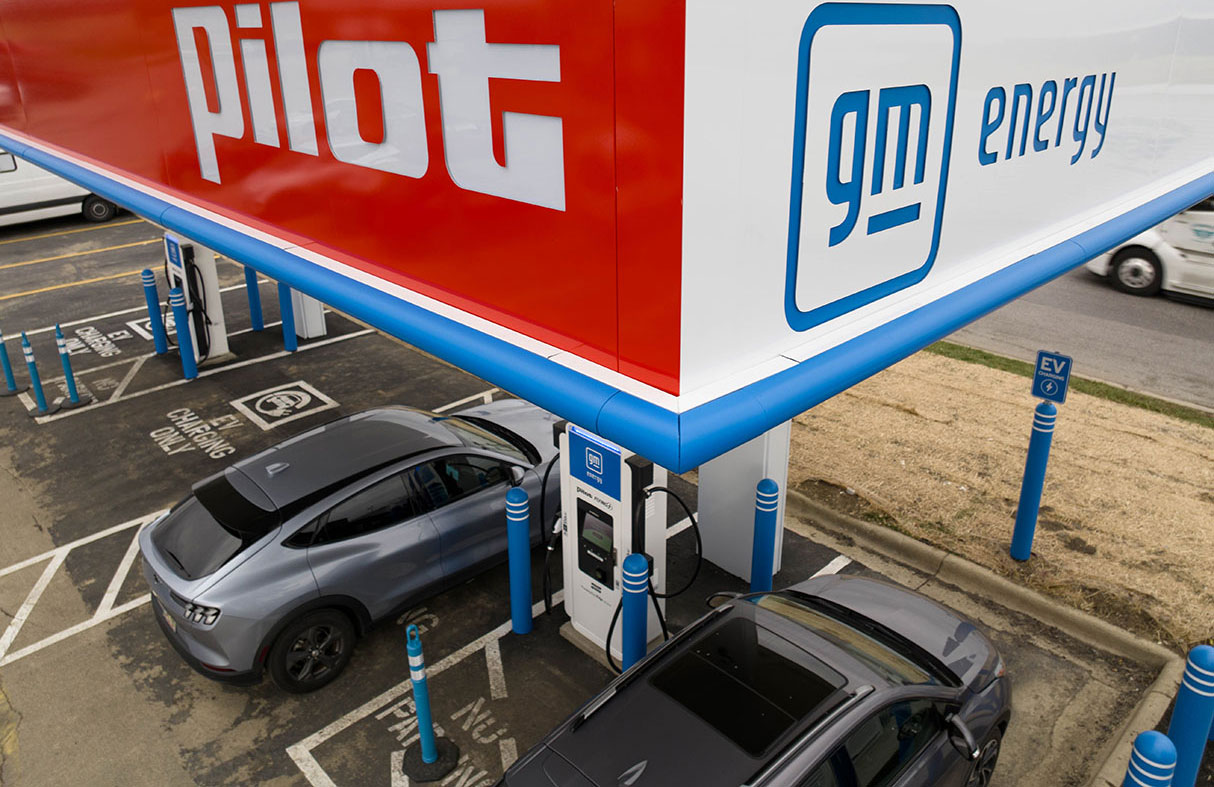
Energy and transportation innovation represent a powerful opportunity for both the private and public sectors to benefit from each other's strengths. We're setting a strong foundation for the future of transportation and mobility in America.
Unleashing Innovation
The Joint Office is kick-starting vital innovations in the private sector. From advancing the development of common connector standards to evolving open-source software solutions and supporting electrical distribution and transmission innovation, the Joint Office is here to catalyze and help scale new mobility and energy technologies. In addition to funding opportunities, the Joint Office has established the standards and frameworks for the electric vehicle (EV) charging industry to innovate on a secure, interoperable foundation and move forward with confidence.
A New Model for Working With Industry
The federal government does not build EV charging and refueling infrastructure alone, and that's why private sector collaboration is so crucial—and why the Joint Office is uniquely designed to accelerate that engagement. We cultivate knowledge and innovation from the private sector to keep our strategies grounded in practical, achievable goals that align with industry realities. We've also handled hundreds of technical assistance inquiries from the private sector to support efficient rollout of effective charging and refueling infrastructure.
Finding Market Fit
Public funding can support charging projects before the financial break-even point so companies can make investments now that will pay off in the long term—giving more people and businesses the confidence to proceed with electrification.
Research shows that most charging happens at home and work, where cars are parked for longer periods of time and energy use is more flexible. Public sector support for approaches such as curbside Level 2 charging is crucial to give more mobility choices to people who can't access charging at home.
Funding Opportunities and Funded Programs
Private sector companies are invited to bid into the National Electric Vehicle Infrastructure (NEVI) Formula Program and Charging and Fueling Infrastructure Program opportunities released by states and communities.
The Joint Office has funded innovative approaches to charging and refueling infrastructure and related needs through the following programs:
Resources for Working With the Government: What You Need To Know
For those new to working with the government, there can be a bit of a learning curve. We're here to accelerate that curve, cut red tape, and clarify requirements in the interest of efficient, effective public-private partnerships. The following resources will get you started with understanding requirements for federally funded EV charging projects.
Working With the Government
- Davis-Bacon and Related Acts, U.S. Department of Labor
- Understand the Davis-Bacon Act and prevailing wage requirements.
- View these FAQs to understand the federal regulation and rulemaking process.
Federal EV Charging Program Requirements
- 23 CFR Part 680: National Electric Vehicle Infrastructure Standards and Requirements
- These standards are required for federally funded charging stations.
- Electric Vehicle Supply Equipment and Considerations for a Reasonable Rate of Return
- Here's how states can think about earning a return on federally funded EV charging stations.
- Standardized Protocol for Real-Time APIs as Required by Title 23 CFR 680.116(c)
- This protocol assists with making EV charging data available by API.
- Waiver of Buy America Requirements for Electric Vehicle Chargers
- The Buy America requirement is currently waived for EV charging stations. Stay tuned for updates.
EV Charging Standards
The Joint Office also supports energy-efficient transit and school buses. These resources provide clarity on relevant programs:
- Low-No and Buses and Bus Facilities FAQs, Federal Transit Administration
- Clean School Bus Program, U.S. Environmental Protection Agency
Convening Industry Representatives
To facilitate public and private sector communication about technology trends, opportunities, and challenges, the Joint Office regularly convened the National Charging Experience (ChargeX) Consortium and Electric Vehicle Working Group (EVWG).
-
ChargeX
The ChargeX Consortium was a collaboration between national labs and organizations representing a cross section of the EV industry to address three EV charging challenges: payment processing and user interface, vehicle-charger communication, and diagnostic data sharing. -
EVWG
The EVWG brought together public and private sector representatives to provide recommendations regarding the development, adoption, and integration of light-, medium-, and heavy-duty EVs into the transportation and energy systems of the United States. They coordinated and consulted with any existing federal interagency working groups on fleet conversion or other similar matters relating to EVs.
ChargeX publications are available online.
Developing Standards and Strategy To Guide Investment
The Joint Office also develops strategic frameworks to align public and private sector investment in the future of transportation. Through our standards work, we've established the technical foundation for rapid industry innovation.
-
National Zero-Emission Freight Corridor Strategy
The National Zero-Emission Freight Corridor Strategy sets an actionable vision and comprehensive approach to accelerating the deployment of a world-class freight network in the United States. It is an all-of-government approach to align, unlock, and unleash medium- and heavy-duty vehicle infrastructure and bolster electric grid and hydrogen planning. -
Standards and Reliability
The Joint Office works to improve charging infrastructure and reliability with a focus on advancing common standards and protocols like J3400, Plug and Charge, and EV metrology, as well as creating a common language for measuring the EV charging user experience.
Through these groups, strategies, standards, and other channels, the Joint Office has created new models for how government works with industry, moving beyond recommendations and white papers to create effective forums for ongoing engagement and the development of practical real-world tools people can use today.
Workforce Development
Investments in innovative transportation and renewable energy technologies are creating good-paying jobs and revitalizing communities across the country. The Joint Office is supporting workforce development efforts across the spectrum, covering positions from electrician apprenticeships to electric vehicle supply equipment (EVSE) maintenance technicians and software developers for grid interactions.
Learn how the Electric Vehicle Infrastructure Training Program and Independent Electrical Contractors Electric Vehicle Charging Station Training Program (IEC Training Advantage) meet the requirements of 23 CFR 680.106(j)(1) for electricians installing, operating, or maintaining EVSE. Most EVSE-related work involves EVSE technicians, who focus on technical installation, configuration, maintenance, and troubleshooting.
Learn more about our workforce development efforts at the Joint Office.
Past News
Here's how we've supported energy and transportation innovation for everyday Americans:
- SAE Industry Technologies Consortia and Joint Office of Energy and Transportation Advance Universal Plug & Charge
- Electric Vehicle Keeps Asheville Residents Charged During Hurricane Helene
- Joint Office of Energy and Transportation Continues to Advance an EV Charging Network That Works for All Consumers With Support for the Newly Released SAE J3400 EV Coupler Recommended Practice
Tools
There are many federal tools and resources available to help with planning charging locations, designing charging stations, performing financial analysis, and applying for grants. Businesses can leverage these tools to understand the federal approach and compare with private sector models.
EV Charging Planning
- CalderaCast simulation platform: Software from Idaho National Laboratory that models how EV chargers draw power from the grid.
- EVI-X modeling suite of EV charging infrastructure analysis tools: A suite of tools from the National Laboratory of the Rockies that informs the planning and development of large-scale EV charging infrastructure deployments—from the regional, state, and national levels to site and facility operations. Tools are available for network planning, including community charging, long-distance driving, and ride sourcing, as well as site design and financial analysis.
- GIS shapefiles for National Zero-Emission Freight Corridor Strategy
Financial Modeling
- Federal Highway Administration Center for Innovative Finance Support: Project Finance Tools and Programs
- EVI-FAST: Electric Vehicle Infrastructure – Financial Analysis Scenario Tool
Contact Us
Get assistance with specific requests for program requirements and funding opportunities.
-
Submit a request
Ask the Joint Office for technical assistance. -
American Association of State Highway and Transportation Officials (AASHTO)
Engage with AASHTO for state transportation questions. -
National Association of State Energy Officials (NASEO)
Connect with state energy officials.